
Seat Arona: Installing a rear carrier system or a bicycle rack on the trailer hitch
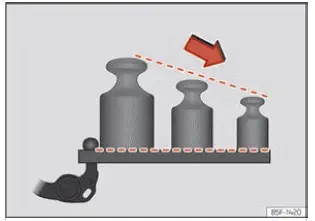
Fig. 149 Recommended weight distribution on
the rear carrier system.
Tow-ball rear carrier systems include items such as bicycle racks or utility boxes mounted onto the trailer hitch.
Fit only rear carrier systems that their manufacturer specifically approves for your exact vehicle model, model year, and version.
SEAT recommends fitting genuine SEAT parts and accessories available through SEAT dealerships, following the carrier manufacturer's fitting guide carefully.
Total load capacity equals the weight of the rear carrier system itself plus whatever cargo or bikes you mount on it.
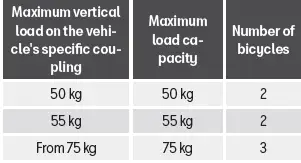
The recommended maximum payload rating of a tow-hitch rear carrier can differ from the maximum vertical coupling load rated for your specific Seat Arona hitch.
Never go over the maximum permitted vertical load on the tow hitch itself, which varies by model version.
Lever forces increase the farther a load sits out from the tow ball head, lowering usable load capacity.
Keep heavy items positioned as close to the tow hitch as possible ››› Fig. 149.
Maximum load capacity depending on the vehicle
Check the maximum vertical load on your Seat Arona coupling to see the recommended load capacity, and consult the table below for load limits.
Following UN-R-55 guidance, SEAT advises carrying no more bicycles than specified for the rear rack system.
Maximum load overhang of the rear carrier system
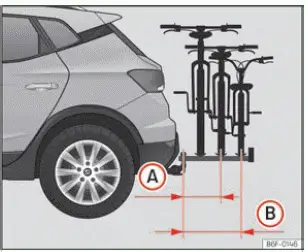
Fig. 150 Schematic representation of the
maximum load overhang of a bicycle rack for two
or three bicycles.
- Up to 55 kg load capacity: 500 mm (about 19.7 in)
- Up to 75 kg load capacity: 700 mm (about 27.6 in)
Measured from the centre of the tow ball head to the centre of the last wheel rail ››› Fig. 150 A, overhang must stay within 500 mm on two-bike racks, and within 700 mm on three-bike racks ››› Fig. 150 B.
WARNING
Improper use or installation of a tow-ball rear carrier system can lead to crashes and personal injuries.
- Confirm that the carrier system fits your vehicle properly before mounting.
- Follow the instructions supplied by the rear carrier manufacturer.
- Never clamp or mount a rear carrier below the tow ball head, where the hitch shape can let the carrier slip off.
Note
Before driving off, SEAT recommends taking off as many removable accessories as possible from items carried on the rear rack.
Detachable items such as baskets, panniers, child seats, or e-bike batteries should be removed where possible to improve aerodynamics and lower the centre of gravity on the rear carrier.
See also:
Unlocking and locking from the inside. "Safe" security system
Unlocking and locking from the inside
Fig. 50 Centre console: central locking switch.
Lock: press the button ›››
Fig. 50.
Unlock: press the button
››› Fig. 50 again.
...
Shaft Assembly and Housing Installation (A/T)
Install the differential assembly in the torque converter housing.
Install the baffle plate.
Assemble the mainshaft, the countershaft, and the secondary shaft.
NO ...
Charging, replacing, disconnecting
and connecting the 12-volt battery
Whenever you suspect that the 12-volt battery on your Seat Arona has suffered damage or developed a fault, have a
qualified specialist workshop test and inspect it.
Charging the 12-volt battery
Re ...
Categories
